

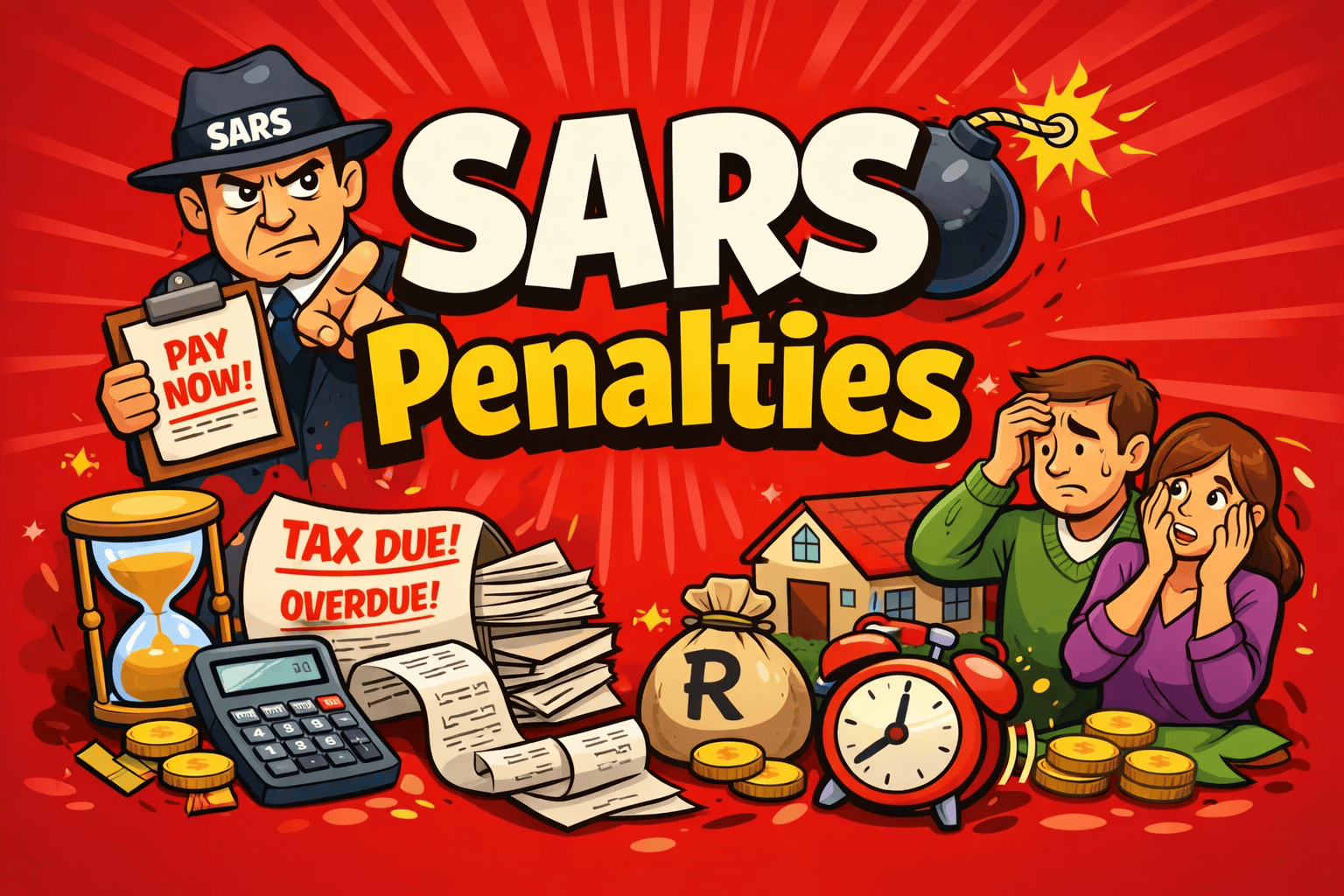
🚨 Penalties Are Getting Real: Trusts, Deadlines & Zero Sympathy
SARS Penalties and why trusts are suddenly in the spotlight
If your trust has been treating tax deadlines like suggestions rather than instructions, 2026 has officially arrived to correct that thinking — firmly and without mercy.
According to recent developments, SARS has shifted gears. Trusts are no longer the quiet passengers in the tax system. They are now front-row, seat-belt-on, under full scrutiny.
The days of “we’ll sort it out later” are over. Let’s unpack what’s happening, what it means for trustees, and how to stay compliant without losing sleep.
🧾 What is an admin penalty from SARS?
An administrative penalty is SARS’s polite-but-expensive reminder that deadlines matter.
It is:
-
A fixed monthly penalty
-
Charged when required returns are not submitted on time
-
Applied even if the trust owes no tax
💡 Important to know:
A dormant trust with zero activity can still be penalised simply for failing to file. Silence is not compliance.
💸 What penalties apply if a trust misses the filing deadline?
If a trust fails to submit its income tax return on time, SARS may impose:
-
Monthly penalties starting at R250
-
Increasing amounts based on taxable income
-
Penalties that can run for up to 35 months
And that’s only the start.
Late filing can also trigger:
-
Estimated assessments
-
Compliance status problems
-
Delays with financing, property transfers, or estate planning
📉 Small admin oversights have a habit of turning into large, unnecessary costs.
🔍 Why is SARS increasing scrutiny on trusts in 2026?
This isn’t random enforcement. It’s targeted.
SARS is tightening the screws because:
-
Trusts are widely used for estate and wealth planning
-
Non-compliance in the trust space has been persistent
-
Global transparency standards are rising
-
SARS systems are better, faster, and far less forgiving
📌 The message is clear:
If a trust exists, it must behave like a taxpayer — not an afterthought.
⚖️ How to dispute a SARS admin penalty
Yes, penalties can be disputed — but only if done correctly.
A proper dispute usually involves:
-
Submitting all outstanding returns
-
Logging a Request for Remission (RFR) on eFiling
-
Providing a clear and factual explanation
-
Uploading supporting documents
🚫 “We forgot” won’t cut it.
✅ Serious illness, system errors, or exceptional circumstances might.
Well-structured, professional motivations stand a far better chance than emotional ones.
🧠 The calm but firm takeaway
Trusts don’t get reminder emails.
They don’t get grace periods.
They get deadlines — and consequences.
If your trust hasn’t filed recently, the smartest move is to deal with it now. Fix what’s outstanding, restore compliance, and stop penalties from quietly stacking up in the background.
Future-you will be very glad you did.
If you feel you need help, don’t lie away at night, just get the right partners on your side, call the Go2 Accountants for the right advise.









Leave A Comment