
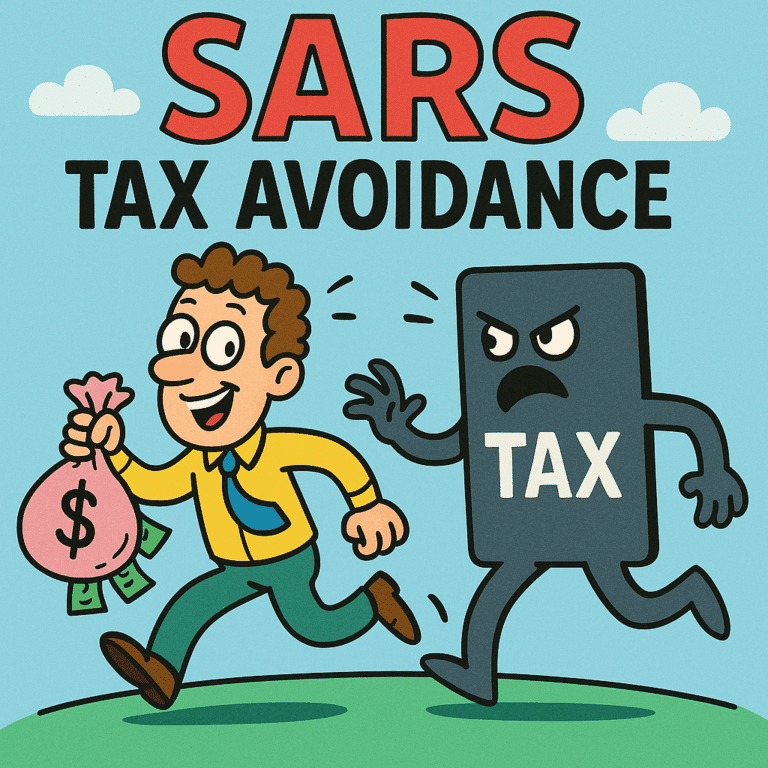
⭐ Introduction
Tax is the one topic that instantly turns outgoing entrepreneurs into quiet introverts.
Why? Because SARS has become digital, automated, data-driven and integrated — and nobody wants to land randomly on a SARS audit radar.
The South African Revenue Service of today is not the SARS from a decade ago.
✅ What qualifies as tax avoidance?
Simple human definition:
You follow the law on paper, but your purpose is actually to avoid paying tax.
This happens when structures exist only to move income into lower-tax pockets.
Examples include:
-
entities that exist only on paper
-
shifting income to a business that never did the work
-
“fake consulting fees” between your own companies to move profit
Tax planning = legal
Artificial avoidance = SARS red-flag magnet
🔥 What is the most common avoidance scheme?
Artificial shifting of profits.
This is when:
| Who earns income | Who shows income |
|---|---|
| Company A | Company B (lower tax) |
The taxman looks for the word substance.
If the transactions make no commercial sense — SARS can reverse it.
👀 Can SARS see your bank account?
Yes — indirectly.
Banks legally submit information to SARS.
Yes SARS can request bank statements at any time.
They don’t need your password, nor your PIN, only justification — and then banks must legally comply.
So yes — SARS can see the financial movement if required.
🚔 Can you go to jail for not paying SARS?
Yes.
Tax non-compliance can escalate beyond admin penalties. It can become criminal.
People in South Africa have already gone to prison for tax crimes — this is not “urban legend”.
Final Thoughts 💡
Trying to be clever at a braai about a secret structure is funny until SARS shows interest.
Better approach:
-
be honest
-
be transparent
-
be compliant
-
sleep properly at night
SARS Tax Avoidance is not a strategy — it’s a risk.
Don’t lie away at night, just get the right partners on your side, meaning the Go2 Accountants.
